Mobile Specialty Coffee · AUSTRIA · CROATIAMobile Specialty Coffee · ÖSTERREICH · KROATIEN
SPECIALTY COFFEE IN UNEXPECTED LOCATIONSSPECIALTY COFFEE AN UNERWARTETEN ORTEN
We don't park, we just reload!
Full barista service and specialty-grade coffee, wherever your event happens to be.Voller Barista-Service und Specialty Coffee, wo auch immer dein Event stattfindet.
Trading City Streets for Coastal Dirt Roads.Stadtstraßen gegen Küstenschotter getauscht.
The vision behind Cafe on the Roast.Die Vision hinter Cafe on the Roast.
It started with an obsession, not just with coffee, but with the idea that the best cup you've ever had shouldn't be tied to a postcode. What if specialty coffee could follow the road? What if the machine, the craft, and the community could move?
Es begann mit einer Obsession, nicht nur für Kaffee, sondern für die Idee, dass der beste Kaffee deines Lebens nicht an eine Postleitzahl gebunden sein sollte. Was, wenn Specialty Coffee der Straße folgen könnte? Was, wenn die Maschine, das Handwerk und die Community mobil wären?
Cafe on the Roast is the product of ideas created behind espresso machines, on Austrian mountains, on Adriatic coastlines, and somewhere between a dream and a build sheet. We're converting a rugged 4x4 into a fully mobile specialty coffee bar, testing and building across Austria and Croatia before it finds its raw, permanent home on Pag Island, where the sun shines and the light hits the limestone just right.
Cafe on the Roast ist das Ergebnis von Ideen, entstanden hinter Espressomaschinen, in österreichischen Bergen, an der adriatischen Küste, irgendwo zwischen einem Traum und einem Bauplan. Wir bauen einen robusten 4x4 zu einer voll mobilen Specialty-Coffee-Bar um. Getestet und weiterentwickelt wird sie quer durch Österreich und Kroatien, bevor sie ihr raues, dauerhaftes Zuhause auf Pag Island findet, wo die Sonne fast das ganze Jahr scheint und das Licht genau richtig auf den Kalkstein fällt.
This isn't a franchise play. It's a craft project. A slow build. A statement that good coffee belongs everywhere, even somewhere with no paved road.
Das ist kein Franchise-Konzept. Das ist ein Handwerksprojekt. Ein langsamer Aufbau. Ein Statement, dass guter Kaffee überallhin gehört, selbst dorthin, wo keine geteerte Straße hinführt.
Built for the wild. Brewed for the coast.Gebaut fürs Raue. Gebrüht für die Küste.
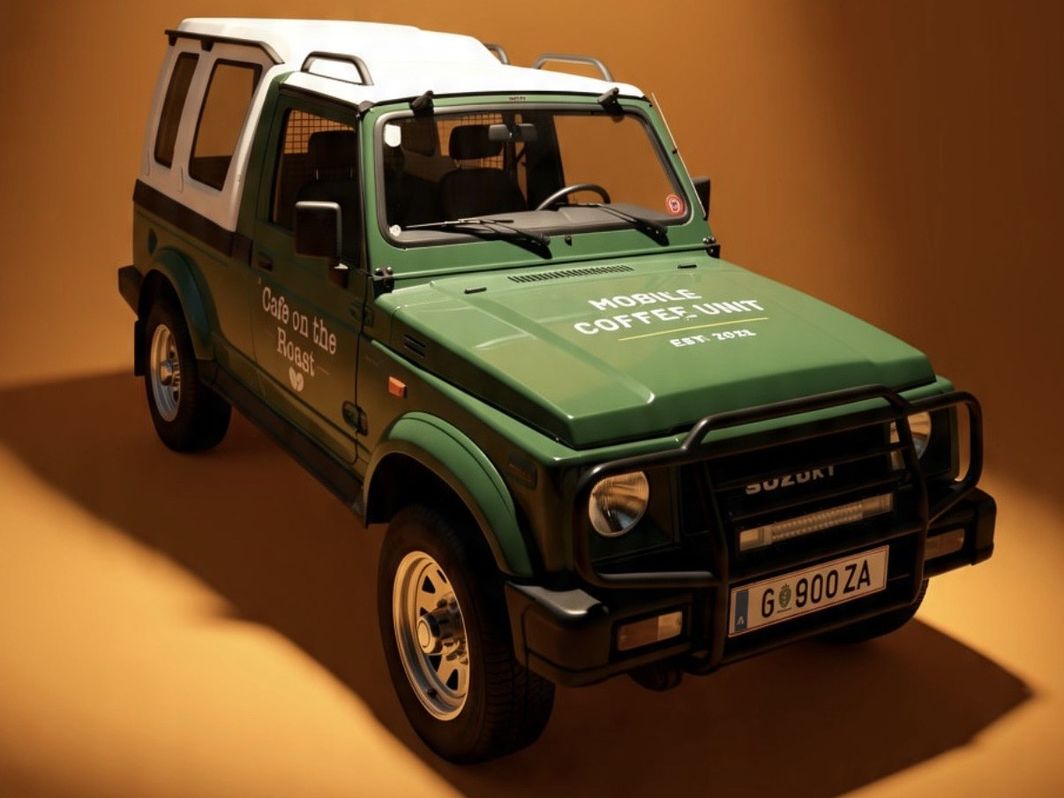
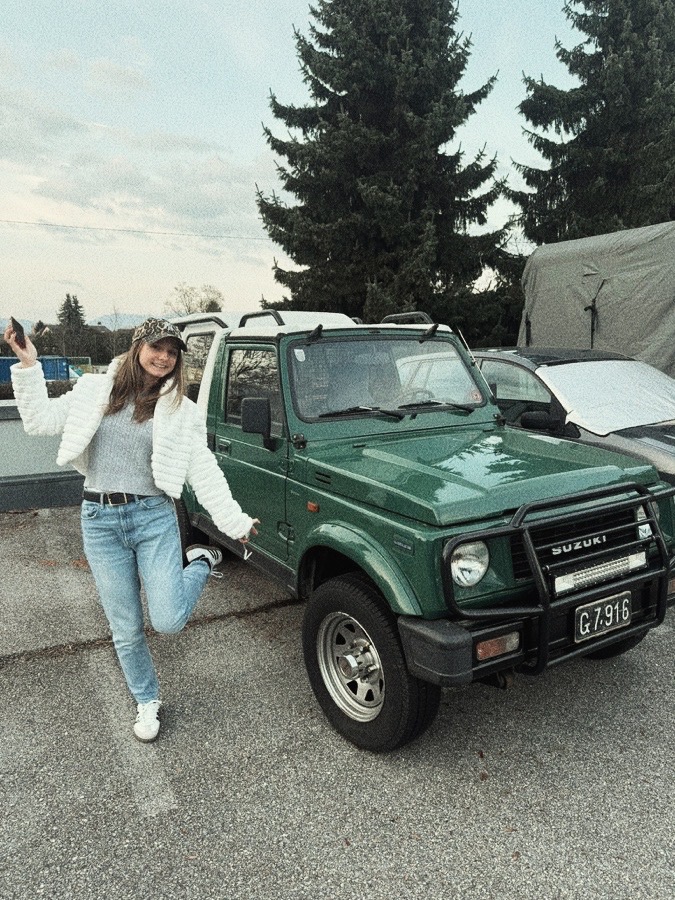
The build starts with a Suzuki SJ413, better known as the Samurai outside of Japan, a compact Japanese 4x4 with legendary off-road bones and a reputation for getting places it has no business being. We're stripping it back, reinforcing parts, and fitting a full specialty coffee setup inside a custom rear module.
Die Basis ist ein Suzuki SJ413, außerhalb Japans besser bekannt als Samurai, ein kompakter japanischer 4x4 mit legendären Offroad-Genen und dem Ruf, überall dort aufzutauchen, wo er eigentlich nichts verloren hat. Wir bauen ihn zurück, verstärken Teile und bauen ein komplettes Specialty-Coffee-Setup in ein maßgefertigtes Heckmodul ein.
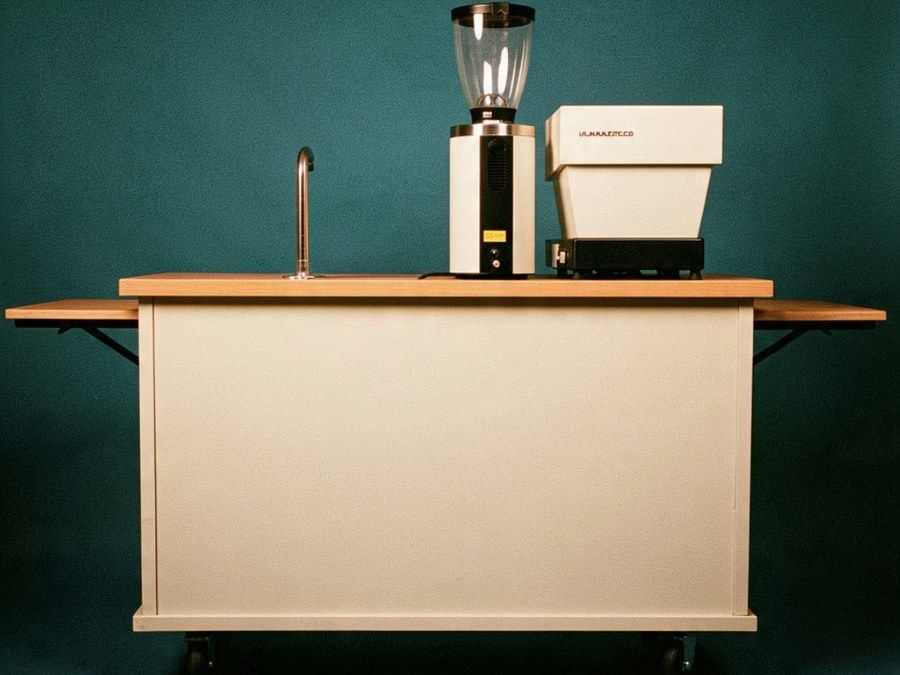
Think Italian charm, espresso machine, fresh grinder, water filtration, and enough storage for single-origin bags from roasters we actually believe in. The Samurai won't be parked on a city high street, it'll be perched on a limestone ridge, catching the Adriatic light, brewing something worth driving for.
Italienischer Charme, Espressomaschine, frischer Mahlgrad, Wasserfiltration, und genug Stauraum für Single-Origin-Bohnen von Röstereien, an die wir wirklich glauben. Der Samurai wird nicht in einer Fußgängerzone parken, sondern auf einem Kalksteinfelsen stehen, im adriatischen Licht, und etwas brühen, für das sich die Fahrt lohnt.
The Base
Die Basis
Suzuki SJ 413
Classic long-wheelbase 4x4 platform. Compact, capable, and built to handle coastal terrain where roads become suggestions.
Klassische 4x4-Plattform mit langem Radstand. Kompakt, geländegängig und gebaut für Küstenterrain, wo Straßen eher eine Empfehlung sind.
The Power
Die Energie
230V & Mobile Battery
For pop-ups, we run on standard 230V power. At remote spots, our mobile battery takes over.
Bei Popups laufen wir mit normalem 230V-Netzstrom. An abgelegenen Spots übernimmt unsere mobile Batterie.
The Gear
Die Ausstattung
La Marzocco Linea Mini R & Eureka Mignon
Professional-grade espresso machine paired with a precision grinder and full water filtration system.
Professionelle Espressomaschine, kombiniert mit einer Präzisionsmühle und vollständiger Wasserfiltration.
Hard Facts
Hard Facts
4.2 × 1.6 m
4.2 x 1.6 meters. Small enough for beaches, mountain roads and tight event spaces, and still fits a full setup.
4,2 x 1,6 Meter. Klein genug für Strände, Bergstraßen und enge Eventflächen, mit vollem Setup an Bord.
NowJetzt
NowJetzt
The VisionDie Vision
The RendersDie Renders
Right Now
Gerade jetzt
Testing in Graz, Austria.Testphase in Graz, Österreich.
Where the build happens, before the road leads to Pag.Hier entsteht der Ausbau, bevor es weiter nach Pag geht.
The Samurai is currently in Graz, where the full cargo buildout is underway. Before the setup ever reaches Pag Island, it gets tested where it's actually being built: real coffee, real people, real feedback.
Der Samurai steht gerade in Graz, wo der komplette Ausbau läuft. Bevor das Setup je auf Pag Island ankommt, wird es genau dort getestet, wo es entsteht: echter Kaffee, echte Leute, echtes Feedback.
That means occasional pop-up test days in Graz this year, alongside the build. It's the same project, the same truck, just the early chapter, not the launch.
Das heißt gelegentliche Pop-up-Testtage in Graz, dieses Jahr, parallel zum Ausbau. Es ist dasselbe Projekt, derselbe Truck, nur ein früheres Kapitel, nicht der Launch.
Built in Graz. The cargo module, power system and layout are being fitted out here, not remotely.
Gebaut in Graz. Cargo-Modul, Stromsystem und Layout werden hier vor Ort gefertigt, nicht aus der Ferne.
Pop-up test days planned in Graz this year, dates announced through Chronicles and the email list.
Pop-up-Testtage dieses Jahr in Graz geplant, Termine werden über Chronicles und den E-Mail-Verteiler angekündigt.
Austria and Croatia, both. The project is growing across both countries. Pag Island stays the long term goal destination for the Samurai.
Österreich und Kroatien, beide. Das Projekt wächst über beide Länder hinweg. Pag Island bleibt das langfristige Ziel für den Samurai.
Chronicles
From the road.
every mile, written down.
Founder Story·August 4, 2026·3 min·0 reads
A Last-Minute Coffee Adventure in Puerto Rico (Part 1)
A last-minute tour request, a missed highway exit, and a mountain road straight out of the jungle. How we found Sandra's Coffee Farm in Puerto Rico.
+
Back in November 2025, we spent our vacation in Puerto Rico. While planning the trip, Vany had already found out that the island is home to several coffee farms offering guided tours. As coffee lovers, one of them went straight onto our list.
A few days into the trip, we met a friendly Uber driver who gave us plenty of local recommendations. Eventually the conversation turned to coffee. When we asked him which farm he'd recommend, his answer came without hesitation.
"You should visit Sandra's Coffee Farm."
A quick search later, we found the farm online and sent a request asking if we could join a tour the next day. It was located roughly two hours from where we were staying in San Juan. We waited for a reply all day. Nothing came.
The next morning, around 8:30, we woke up and checked our phones.
There it was.
"You're welcome to visit. The tour starts at 11:00."
We looked at each other. Then at the clock.
Let's go.
Breakfast suddenly became optional. Coffee, however, definitely wasn't. We grabbed a cup for the road, jumped in the car, and started the drive into Puerto Rico's coffee-growing mountains.
For most of the journey, everything went surprisingly well. We were even a few minutes ahead of schedule. That extra time disappeared fast, though. Somewhere along the highway, we got so caught up in conversation that we missed our exit entirely.
Our estimated arrival went from 10:55 to 11:05 in an instant.
"I'll make up those five minutes," Markus announced, with total confidence.
As it turned out, the last few kilometers would be the real adventure.
The paved roads disappeared, replaced by a narrow, steep mountain road that looked like it hadn't seen maintenance in years. I'd already read about it in the Google reviews before the trip, but experiencing it firsthand was something else entirely.
Leaves covered the ground. Dense tropical vegetation pressed in on both sides. It felt like driving straight into the jungle.
Exciting and a little intimidating, in equal parts.
Somehow Markus got us through the winding road and even overtook a Jeep that looked like it belonged to a local who'd driven this route hundreds of times.
Not bad.
Against all odds, we rolled into Sandra's Coffee Farm right at 11:00 a.m.
And we weren't even the last ones to arrive.
Just a moment later, our tour guide, Carmelo, pulled up in his Jeep, greeting everyone with the relaxed confidence of someone completely at home in these mountains. This was the guy Markus had just overtaken.
The adventure was only just beginning.
Gründergeschichte·4. August 2026·3 Min.·0 Aufrufe
Ein spontanes Kaffee-Abenteuer in Puerto Rico (Teil 1)
Eine kurzfristige Zusage, eine verpasste Ausfahrt und eine Bergstraße wie aus dem Dschungel. Wie wir Sandra's Coffee Farm in Puerto Rico fanden.
+
Im November 2025 verbrachten wir unseren Urlaub in Puerto Rico. Bei der Planung hatte Vany bereits herausgefunden, dass es auf der Insel mehrere Kaffeefarmen mit geführten Touren gibt. Als Kaffeeliebhaber stand einer dieser Besuche sofort auf unserer Liste.
Ein paar Tage nach unserer Ankunft trafen wir einen freundlichen Uber-Fahrer, der uns jede Menge lokale Tipps gab. Irgendwann kam das Gespräch auf Kaffee. Als wir ihn fragten, welche Farm er empfehlen würde, kam die Antwort ohne Zögern.
"Ihr solltet Sandra's Coffee Farm besuchen."
Eine kurze Suche später hatten wir die Farm online gefunden und eine Anfrage geschickt, ob wir am nächsten Tag an einer Tour teilnehmen könnten. Sie lag ungefähr zwei Stunden von unserer Unterkunft in San Juan entfernt. Wir warteten den ganzen Tag auf eine Antwort. Es kam nichts.
Am nächsten Morgen, gegen 8:30 Uhr, wachten wir auf und checkten unsere Handys.
Da war sie.
"Ihr seid herzlich willkommen. Die Tour beginnt um 11:00 Uhr."
Wir sahen uns an. Dann auf die Uhr.
Los geht's.
Frühstück wurde plötzlich zur Nebensache. Kaffee dagegen definitiv nicht. Wir schnappten uns einen Kaffee für unterwegs, sprangen ins Auto und fuhren los, hinein in Puerto Ricos Kaffeeberge.
Der größte Teil der Fahrt lief erstaunlich gut. Wir lagen sogar ein paar Minuten vor der Zeit. Dieser Vorsprung war allerdings schnell wieder dahin. Irgendwo auf dem Highway waren wir so ins Gespräch vertieft, dass wir unsere Ausfahrt komplett verpassten.
Unsere geschätzte Ankunftszeit sprang von 10:55 auf 11:05.
"Die fünf Minuten hol ich wieder rein", verkündete Markus, mit voller Überzeugung.
Wie sich herausstellen sollte, waren die letzten Kilometer das eigentliche Abenteuer.
Die asphaltierten Straßen verschwanden und wichen einer schmalen, extrem steilen Bergstraße, die aussah, als hätte sie seit Jahren keine Instandhaltung mehr gesehen. Ich hatte vor der Reise bereits in den Google-Bewertungen davon gelesen, aber sie selbst zu erleben, war noch einmal etwas ganz anderes.
Blätter bedeckten den Boden. Dichte tropische Vegetation drängte sich von beiden Seiten heran. Es fühlte sich an, als würden wir direkt in den Dschungel hineinfahren.
Aufregend und ein bisschen beängstigend, zu gleichen Teilen.
Irgendwie brachte uns Markus sicher durch die kurvige Straße und überholte sogar einen Jeep, der aussah, als würde er einem Einheimischen gehören, der diese Strecke schon hunderte Male gefahren war.
Nicht schlecht.
Gegen alle Widerstände rollten wir Punkt 11:00 Uhr bei Sandra's Coffee Farm ein.
Und wir waren nicht einmal die Letzten, die ankamen.
Nur einen Moment später fuhr unser Tourguide Carmelo mit seinem Jeep vor und begrüßte alle mit der entspannten Selbstverständlichkeit von jemandem, der in diesen Bergen völlig zu Hause ist. Das war der Typ, den Markus gerade überholt hatte.
Das Abenteuer fing gerade erst an.
Founder Story·May 8, 2026·4 min·0 reads
The Text That Started It.
Surin Beach, Phuket, 2025. A converted Suzuki Samurai, two people, and no org chart in sight. The scene that became a text message that became Cafe on the Roast.
+
I was on gardening leave from Rimac. Before starting the next position, I went to Thailand for Muay Thai training. Fourteen years in the sport, trained to instructor level at Master Toddy's. A return to something that had been mine for a long time, before careers and programs and organizational charts.
I was not looking for anything.
Surin Beach, Phuket, 2025
There is a beach on the northwest coast of Phuket called Surin. In February the water is clear and the light comes in at an angle that makes everything look slightly better than it probably is.
On the road running parallel to the beach there was a converted Suzuki Samurai.
Two women were running it. Cold brew, espresso, something that had no business being as good as it was in a vehicle that old and that perfectly positioned. Small operation. No menu board I remember clearly. No corporate anything visible from where I was standing.
I ordered a coffee. I paid. I did not leave.
What I Was Actually Looking At
The coffee was good. That is true and also not the point.
What stopped me was the whole picture. The vehicle was exactly what it was. The location was exactly right for what it was doing. The two people running it were exactly where the product met the person who wanted it, with nothing in between.
I work in industries where that chain is very long. Powertrain development for a car that will be driven by a few hundred buyers on the other side of a dealer network and a logistics chain and a financing operation. I have managed 120 people across multiple countries to deliver a product to a client who builds cars for people who already own everything.
The Samurai on Surin Beach had none of that. It had two people, a machine, and whoever walked up.
I stood there for longer than was normal.
The Text
I took out my phone and sent one message to Vanessa.
I want to do this. Our version. In Croatia.
She responded in about four minutes.
That was February 2025. It is now the entire project.
Why Croatia. Why the Samurai.
Neither was a choice we made sitting down with a spreadsheet.
Vanessa and I had built our lives in Zagreb during the Rimac years. Croatia was not where we were from and not where we had planned to end up. It became home because we chose it actively, which is a different kind of belonging than the kind you are born into.
Pag Island was already part of the geography we knew. Limestone karst. Salt flats. The Bura wind off the mountains. Roads that go somewhere interesting. A coastline that makes you want to stay.
The Suzuki Samurai was the only logical answer to the problem of bringing serious equipment to serious locations. Compact four-wheel drive. Real off-road capability in a small package. Old enough to have character. The right size for what we needed to fit inside it.
A La Marzocco Linea Mini R inside a 1987 Samurai is not a design statement. It is the most direct answer to a logistics problem.
What It Takes
The distance between a text on a Thai beach and a functioning mobile coffee bar is longer than it looks.
We are doing the full build. Structural reinforcement. Dual battery system with solar-assisted auxiliary power for running espresso equipment off-grid. Water filtration designed for locations where the water supply is unreliable. Custom rear module. The whole thing engineered to run reliably in a Dalmatian summer with limestone dust on everything.
I have spent ten years learning how to engineer things that work under real conditions. That knowledge is the main thing I brought to this project.
Vanessa owns a La Marzocco Linea Mini R. She did not own one three years ago. She will be running the bar. That arc is its own story.
The Point of the Beach
The Samurai on Surin Beach was not the idea. The idea had been forming for years, as a low-frequency question about what I was building and for whom and how close I could get to the answer.
Thailand gave it a specific shape. One truck, two people, the right location, and a product that was worth going to.
That was all I needed to see.
Cafe on the Roast. Pag Island, Croatia. Launching 2027.
Follow the road.
Gründergeschichte·8. Mai 2026·4 Min.·0 Aufrufe
Die Nachricht, mit der alles begann.
Surin Beach, Phuket, 2025. Ein umgebauter Suzuki Samurai, zwei Menschen, und weit und breit kein Organigramm. Die Szene, die zu einer Textnachricht wurde, die zu Cafe on the Roast wurde.
+
Ich war in der Gardening Leave von Rimac. Bevor ich die nächste Position antrat, ging ich für Muay-Thai-Training nach Thailand. Vierzehn Jahre in diesem Sport, ausgebildet bis zum Instructor Level bei Master Toddy's. Eine Rückkehr zu etwas, das mir lange gehört hatte, bevor Karrieren und Programme und Organigramme dazukamen.
Ich war auf der Suche nach nichts.
Surin Beach, Phuket, 2025
An der Nordwestküste von Phuket gibt es einen Strand namens Surin. Im Februar ist das Wasser klar und das Licht fällt in einem Winkel ein, der alles ein bisschen besser aussehen lässt, als es vermutlich ist.
An der Straße parallel zum Strand stand ein umgebauter Suzuki Samurai.
Zwei Frauen betrieben ihn. Cold Brew, Espresso, etwas, das eigentlich gar nicht so gut sein sollte in einem Fahrzeug, das so alt war und so perfekt platziert. Kleiner Betrieb. Keine Speisekarte, an die ich mich klar erinnere. Nichts Konzernhaftes sichtbar von dort, wo ich stand.
Ich bestellte einen Kaffee. Ich bezahlte. Ich ging nicht.
Was ich eigentlich sah
Der Kaffee war gut. Das stimmt, und es ist trotzdem nicht der Punkt.
Was mich stoppte, war das ganze Bild. Das Fahrzeug war genau das, was es war. Der Standort passte genau zu dem, was dort geschah. Die zwei Menschen, die den Betrieb führten, standen genau dort, wo das Produkt auf die Person traf, die es wollte, ohne irgendetwas dazwischen.
Ich arbeite in Branchen, in denen diese Kette sehr lang ist. Antriebsentwicklung für ein Auto, das von ein paar Hundert Käufern gefahren wird, auf der anderen Seite eines Händlernetzes, einer Logistikkette und einer Finanzierungsstruktur. Ich habe 120 Menschen über mehrere Länder hinweg geführt, um ein Produkt an einen Kunden zu liefern, der Autos für Menschen baut, die bereits alles besitzen.
Der Samurai am Surin Beach hatte nichts davon. Er hatte zwei Menschen, eine Maschine, und wer auch immer vorbeikam.
Ich stand länger dort, als es normal gewesen wäre.
Die Nachricht
Ich holte mein Handy heraus und schickte eine Nachricht an Vanessa.
Ich will das machen. Unsere Version. In Kroatien.
Sie antwortete nach etwa vier Minuten.
Das war im Februar 2025. Heute ist es das gesamte Projekt.
Warum Kroatien. Warum der Samurai.
Keines von beidem war eine Entscheidung, die wir am Schreibtisch mit einer Tabellenkalkulation getroffen haben.
Vanessa und ich hatten uns während der Rimac-Jahre in Zagreb ein Leben aufgebaut. Kroatien war nicht der Ort, aus dem wir stammten, und nicht der Ort, an dem wir landen wollten. Es wurde zur Heimat, weil wir es aktiv gewählt haben, was eine andere Art von Zugehörigkeit ist als die, in die man hineingeboren wird.
Die Insel Pag war bereits Teil der Geografie, die wir kannten. Karstlandschaft aus Kalkstein. Salinen. Der Bura-Wind von den Bergen. Straßen, die irgendwohin Interessantes führen. Eine Küste, die einen zum Bleiben bewegt.
Der Suzuki Samurai war die einzig logische Antwort auf das Problem, ernsthaftes Equipment an ernsthafte Orte zu bringen. Kompakter Allradantrieb. Echte Geländetauglichkeit in kleinem Format. Alt genug, um Charakter zu haben. Genau die richtige Größe für das, was wir hineinbringen mussten.
Eine La Marzocco Linea Mini R in einem Samurai von 1987 ist keine Design-Aussage. Es ist die direkteste Antwort auf ein Logistikproblem.
Was es braucht
Die Distanz zwischen einer Textnachricht an einem thailändischen Strand und einer funktionierenden mobilen Kaffeebar ist größer, als es aussieht.
Wir bauen den kompletten Umbau. Strukturelle Verstärkung. Ein Zweibatteriesystem mit solarunterstützter Zusatzstromversorgung, um Espressoequipment abseits des Stromnetzes zu betreiben. Wasserfilterung, konzipiert für Orte, an denen die Wasserversorgung unzuverlässig ist. Individuelles Heckmodul. Das Ganze ausgelegt, um in einem dalmatinischen Sommer zuverlässig zu laufen, mit Kalksteinstaub auf allem.
Ich habe zehn Jahre damit verbracht zu lernen, wie man Dinge konstruiert, die unter echten Bedingungen funktionieren. Dieses Wissen ist das Wichtigste, was ich in dieses Projekt eingebracht habe.
Vanessa besitzt eine La Marzocco Linea Mini R. Vor drei Jahren besaß sie noch keine. Sie wird die Bar führen. Dieser Bogen ist eine eigene Geschichte.
Der Punkt am Strand
Der Samurai am Surin Beach war nicht die Idee. Die Idee hatte sich über Jahre geformt, als eine leise, im Hintergrund laufende Frage danach, was ich baute, für wen, und wie nah ich der Antwort kommen konnte.
Thailand gab ihr eine konkrete Form. Ein Fahrzeug, zwei Menschen, der richtige Ort, und ein Produkt, für das es sich zu kommen lohnte.
Mehr musste ich nicht sehen.
Cafe on the Roast. Insel Pag, Kroatien. Start 2027.
Folge der Straße.
Personal Authority·April 29, 2026·7 min·0 reads
People Call This a Burnout Exit.
Everyone reads the exit. Nobody reads the decade before it. The actual timeline of why I left the best engineering job I will ever have.
+
People see a project manager quit his position leading the Bugatti powertrain program and open a coffee bar. They read the story and they reach for a diagnosis.
Burnout. Midlife crisis. Checked out.
It is the simplest explanation and it is wrong.
Not wrong in the way that facts are wrong. Wrong in the way that reading the last chapter of a book and summarizing the plot is wrong. The ending is accurate. The meaning is completely missed.
What the Story Looks Like from the Outside
Project manager. Senior position. Rimac Technology, Zagreb. The client is Bugatti. The program is the powertrain for the successor to the Chiron. 120 engineers across multiple countries at peak. Procurement, manufacturing, industrialization, quality, logistics. A multi-year program culminating in a car that carries one of the most recognized names in automotive history.
Then: gardening leave. Munich Electrification. And eventually, a Suzuki Samurai and a La Marzocco espresso machine.
I understand why people reach for burnout. It is a known category. It makes the math work. High-pressure career plus unexpected exit equals breakdown. The narrative fits.
It does not describe what happened.
The Decade Before the Exit
I was nineteen when I spent a year as a paramedic in the Austrian Alps. Not because it was strategic. Because I wanted to understand what mattered when things went wrong.
From there: Formula Student racing at TU Graz. Then AVL, where I ran powertrain testing including a MotoGP project. Then Valeo Siemens, technical project manager for the Mercedes and AMG EVA2 electric platform. Then Rimac.
At each stage, the work became more complex and the organization became larger. This is how careers in engineering are supposed to go. More responsibility. More scale. More distance from the thing being built.
I was good at all of it. I want to be precise about this. The Tourbillon program was extraordinary work. The team was world-class. I have no criticism of the engineering, the company, or the people. I am proud of what we built.
But somewhere inside that decade, I kept having a version of the same conversation.
Not out loud. Not in any meeting or performance review. A conversation I had with myself, usually while working on something technically impressive, about who the work was actually for and how close I could get to the answer.
The conversation did not have urgency. It was not a crisis. It was more like a low-frequency sound that you stop noticing until the room goes quiet.
The Room Went Quiet
I was working remotely on the Dalmatian coast. The Adriatic in front of me. On my screen: a powertrain for a car built in a few hundred units for buyers who could already afford anything.
A grid failure took out much of Dalmatia and into Bosnia. The screens went dark.
In that silence the question became specific for the first time.
What am I actually building here?
I want to be careful about what I mean by that question. I was not questioning the quality of the engineering. I was not questioning whether the car should exist. I was not dismissing the value of the work.
I was doing something simpler. I was counting the number of people the work actually reached and noticing that the number had been getting smaller as my career got larger.
The most sophisticated system I had ever touched was destined for fewer buyers than a single apartment building holds residents.
That is not a moral judgment. It is an observation. And once I had made it clearly, I could not unmake it.
Thailand Did Not Start It
During gardening leave before joining Munich Electrification, I went to Thailand for Muay Thai training. On Surin Beach in Phuket I saw a converted Suzuki Samurai running a coffee bar. Two people. No organizational structure visible anywhere. Just a truck, a product, and a place worth going to.
I stood there longer than I should have.
The coffee was good. That was not why I stayed. I stayed because the whole picture was exactly what the decade-long conversation had been circling without ever landing on. No intermediary. No organizational distance. The thing being made and the person receiving it, without anything in between.
I took out my phone and texted Vanessa.
I want to do this. Our version. In Croatia.
People read that text as the beginning. It was not. It was the moment ten years of the same low-frequency question finally had a specific shape to pour itself into.
What Looks Like Impulse
The question I have been asked most often since leaving is some version of: what went wrong?
Nothing went wrong. That is the honest answer and I understand why it is unsatisfying.
What actually happened is that I spent ten years building exactly the skills that this project requires. Powertrain engineering teaches you tolerances and failure modes. Project management across 120 people teaches you what breaks between the plan and the execution. Running a multi-country procurement operation teaches you supply chain in ways that a business school case study does not.
None of that transfers directly to running a mobile espresso bar on a Croatian island. All of it transfers completely.
The Samurai will have limestone dust on everything in Dalmatian summer. The espresso machine has to perform without a stable power supply. The water filtration has to work off-grid. These are engineering problems. I have spent a decade learning to solve engineering problems under real conditions.
What looks like impulse from the outside is a decade of preparation that finally found its application.
We Are Building It Now
Cafe on the Roast is not a coffee brand. It is not a lifestyle project. It is not a reaction to anything.
It is the most direct answer I could find to a question I had been asking for ten years: what do you build when you want to be close to the thing you are making and close to the people it is made for?
A Suzuki Samurai on Pag Island, Croatia. A La Marzocco Linea Mini R. Single-origin beans from roasters we actually believe in. A location that makes the drive worth it.
Launching 2027. Follow the road.
Persönliche Autorität·29. April 2026·7 Min.·0 Aufrufe
Manche nennen es einen Burnout-Ausstieg.
Alle lesen den Ausstieg. Niemand liest das Jahrzehnt davor. Der tatsächliche Ablauf, warum ich den besten Engineering-Job verließ, den ich je haben werde.
+
Die Leute sehen einen Projektmanager, der seine Position an der Spitze des Bugatti-Antriebsprogramms kündigt und eine Kaffeebar eröffnet. Sie lesen die Geschichte und greifen nach einer Diagnose.
Burnout. Midlife-Crisis. Innerlich gekündigt.
Es ist die einfachste Erklärung, und sie ist falsch.
Nicht falsch in dem Sinn, dass Fakten falsch sind. Falsch in dem Sinn, wie es falsch ist, das letzte Kapitel eines Buches zu lesen und daraus die Handlung zusammenzufassen. Das Ende stimmt. Die Bedeutung wird komplett verfehlt.
Wie die Geschichte von außen aussieht
Projektmanager. Führungsposition. Rimac Technology, Zagreb. Der Kunde ist Bugatti. Das Programm ist der Antrieb für den Nachfolger des Chiron. 120 Ingenieure über mehrere Länder hinweg auf dem Höhepunkt. Beschaffung, Fertigung, Industrialisierung, Qualität, Logistik. Ein mehrjähriges Programm, das in einem Auto mündet, das einen der bekanntesten Namen der Automobilgeschichte trägt.
Dann: Gardening Leave. Munich Electrification. Und schließlich ein Suzuki Samurai und eine La-Marzocco-Espressomaschine.
Ich verstehe, warum Leute nach Burnout greifen. Es ist eine bekannte Kategorie. Die Rechnung geht auf. Hochdruckkarriere plus unerwarteter Ausstieg gleich Zusammenbruch. Die Erzählung passt.
Sie beschreibt nur nicht, was passiert ist.
Das Jahrzehnt vor dem Ausstieg
Ich war neunzehn, als ich ein Jahr lang als Rettungssanitäter in den österreichischen Alpen arbeitete. Nicht aus strategischen Gründen. Weil ich verstehen wollte, was zählt, wenn etwas schiefgeht.
Von dort aus: Formula-Student-Rennsport an der TU Graz. Dann AVL, wo ich Antriebstests leitete, darunter ein MotoGP-Projekt. Dann Valeo Siemens, technischer Projektmanager für die Elektroplattform EVA2 von Mercedes und AMG. Dann Rimac.
Auf jeder Stufe wurde die Arbeit komplexer und die Organisation größer. So sollen Karrieren im Engineering üblicherweise verlaufen. Mehr Verantwortung. Mehr Größenordnung. Mehr Abstand von dem Ding, das gebaut wird.
Ich war gut in all dem. Ich möchte hier präzise sein. Das Tourbillon-Programm war außergewöhnliche Arbeit. Das Team war Weltklasse. Ich habe keinerlei Kritik am Engineering, am Unternehmen oder an den Menschen. Ich bin stolz auf das, was wir gebaut haben.
Aber irgendwo in diesem Jahrzehnt führte ich immer wieder eine Version desselben Gesprächs.
Nicht laut. Nicht in irgendeinem Meeting oder Mitarbeitergespräch. Ein Gespräch, das ich mit mir selbst führte, meist während ich an etwas technisch Beeindruckendem arbeitete, darüber, für wen die Arbeit eigentlich war und wie nah ich der Antwort kommen konnte.
Das Gespräch hatte keine Dringlichkeit. Es war keine Krise. Es war eher wie ein leises Grundrauschen, das man nicht mehr bemerkt, bis der Raum plötzlich still wird.
Der Raum wurde still
Ich arbeitete remote an der dalmatinischen Küste. Die Adria vor mir. Auf meinem Bildschirm: ein Antrieb für ein Auto, gebaut in ein paar Hundert Einheiten, für Käufer, die sich bereits alles leisten konnten.
Ein Netzausfall legte weite Teile Dalmatiens und Bosniens lahm.
In dieser Stille wurde die Frage zum ersten Mal konkret.
Was baue ich hier eigentlich?
Ich möchte genau sein, was diese Frage bedeutete und was nicht. Ich stellte nicht die Qualität des Engineerings infrage. Ich stellte nicht infrage, ob das Auto existieren sollte. Ich wollte den Wert der Arbeit nicht kleinreden.
Ich tat etwas Einfacheres. Ich zählte die Anzahl der Menschen, die die Arbeit tatsächlich erreichte, und bemerkte, dass diese Zahl kleiner wurde, je größer meine Karriere wurde.
Das anspruchsvollste System, das ich je angefasst hatte, war für weniger Käufer bestimmt, als ein einziges Mehrfamilienhaus Bewohner hat.
Das ist kein moralisches Urteil. Es ist eine Beobachtung. Und sobald ich sie klar formuliert hatte, konnte ich sie nicht mehr zurücknehmen.
Thailand hat es nicht ausgelöst
Während der Gardening Leave, bevor ich bei Munich Electrification anfing, ging ich für Muay-Thai-Training nach Thailand. Am Surin Beach in Phuket sah ich einen umgebauten Suzuki Samurai, der eine Kaffeebar betrieb. Zwei Menschen. Keine Organisationsstruktur irgendwo sichtbar. Nur ein Fahrzeug, ein Produkt, und ein Ort, für den es sich zu kommen lohnte.
Ich stand länger dort, als ich sollte.
Der Kaffee war gut. Das war nicht der Grund, warum ich blieb. Ich blieb, weil das ganze Bild genau das war, um das dieses jahrzehntelange Gespräch immer gekreist war, ohne je zu landen. Kein Vermittler. Keine organisatorische Distanz. Das Ding, das gemacht wird, und die Person, die es empfängt, ohne irgendetwas dazwischen.
Ich holte mein Handy heraus und schrieb Vanessa.
Ich will das machen. Unsere Version. In Kroatien.
Die Leute lesen diese Nachricht als den Anfang. Das war sie nicht. Es war der Moment, in dem zehn Jahre derselben leisen Frage endlich eine konkrete Form fanden, in die sie sich ergießen konnte.
Was wie ein Impuls aussieht
Die Frage, die mir seit meinem Ausstieg am häufigsten gestellt wird, ist eine Version von: Was ist schiefgelaufen?
Nichts ist schiefgelaufen. Das ist die ehrliche Antwort, und ich verstehe, warum sie unbefriedigend ist.
Was tatsächlich passiert ist: Ich habe zehn Jahre damit verbracht, genau die Fähigkeiten aufzubauen, die dieses Projekt erfordert. Antriebstechnik lehrt Toleranzen und Fehlermodi. Projektmanagement über 120 Menschen hinweg lehrt, was zwischen Plan und Umsetzung kaputtgeht. Der Betrieb einer länderübergreifenden Beschaffungsorganisation lehrt Lieferketten auf eine Weise, die keine Business-School-Fallstudie vermittelt.
Nichts davon überträgt sich direkt auf den Betrieb einer mobilen Espressobar auf einer kroatischen Insel. Alles davon überträgt sich vollständig.
Der Samurai wird in einem dalmatinischen Sommer Kalksteinstaub auf allem haben. Die Espressomaschine muss ohne stabile Stromversorgung funktionieren. Die Wasserfilterung muss abseits des Netzes funktionieren. Das sind Engineering-Probleme. Ich habe ein Jahrzehnt damit verbracht zu lernen, Engineering-Probleme unter echten Bedingungen zu lösen.
Was von außen wie ein Impuls aussieht, ist ein Jahrzehnt der Vorbereitung, das endlich seine Anwendung gefunden hat.
Wir bauen es jetzt
Cafe on the Roast ist keine Kaffeemarke. Es ist kein Lifestyle-Projekt. Es ist keine Reaktion auf irgendetwas.
Es ist die direkteste Antwort, die ich finden konnte auf eine Frage, die ich mir seit zehn Jahren stelle: Was baut man, wenn man dem, was man macht, nahe sein will, und den Menschen, für die man es macht?
Ein Suzuki Samurai auf der Insel Pag, Kroatien. Eine La Marzocco Linea Mini R. Single-Origin-Bohnen von Röstereien, an die wir wirklich glauben. Ein Ort, der die Anfahrt wert macht.
Start 2027. Folge der Straße.
Personal Authority·April 30, 2026·8 min·0 reads
I Built the Bugatti Powertrain. Then I Built a Coffee Bar.
I led the team that built the Bugatti Tourbillon powertrain. A power outage in Šibenik asked a question I could not put back. This is the full account.
+
The car cost several million euros. We built it for people who already owned everything. And somewhere on the Dalmatian coast, when the grid went down and the screens went dark, I sat in front of the Adriatic and asked a question I could not put back:
What am I actually building here?
That question ended a career I was proud of. It also gave me something I could not have found any other way.
The Machine Before the Question
I did not start as someone who liked coffee. I started as a kid in Graz who took mopeds apart in garages and refused to ask for help until the thing worked again.
That stubbornness went through Formula Student racing at TU Graz, a year as a paramedic in the Austrian Alps at nineteen, and eventually into the automotive industry. AVL, where I ran powertrain testing including a MotoGP project. Valeo Siemens, where I was technical project manager for the Mercedes and AMG EVA2 electric platform. Then Rimac Technology, Zagreb, 2022.
The brief at Rimac was clear: lead powertrain development for a scalable platform feeding the successor to the Bugatti Chiron. The car that became the Bugatti Tourbillon.
The program was called AXL_SC1. Three products derived from it. My team at peak: 120 engineers spanning procurement, manufacturing, industrialization, quality, and logistics across multiple countries. The customer was Bugatti.
We delivered. The Tourbillon exists. The BR1 powertrain inside it exists because of the work my team built from 2022, and continues to develop today.
On any objective measure: peak of a career.
A Blackout in Šibenik
I was working remotely. Dalmatian coast. The Adriatic in front of me, and on my screen: a powertrain for a car produced in a few hundred units, destined for buyers who could already afford anything.
The power went out.
Not just locally. A grid failure took out much of Dalmatia and into Bosnia. The screens went dark. The machine sounds stopped.
In that silence, a question formed without warning:
What am I actually building here? An expensive toy for people who already have everything.
I want to be precise about what that question was and what it was not. The engineering was extraordinary. The team was world-class. I am proud of the Tourbillon program without reservation. But the question was not about quality. It was about proximity.
A decade of increasing technical complexity. Increasing organizational scale. And a shrinking number of people actually served by the work. The most sophisticated vehicle I had ever touched was destined for fewer buyers than a single apartment building holds residents.
The question would not leave.
Thailand Changed the Variables
In 2025, during gardening leave from Rimac before joining Munich Electrification, I went to Thailand for Muay Thai training. Fourteen years of the sport, trained to instructor level at Master Toddy's Academy. A return to the source. I found something I had not planned to find.
Surin Beach, Phuket. A coffee truck. A Suzuki Samurai, converted. Two women running it with the ease of people who genuinely love what they are doing. Cold brew, espresso, coffee that had no business being this good in a vehicle this old and this perfectly placed.
I stood there longer than expected.
The coffee was good. But what stopped me was not the coffee. It was the whole picture. The vehicle. The location. The directness of it. Two people, a truck, a product, and a place worth going to. No organization chart. No stakeholder matrix. No intermediary between the thing being made and the person receiving it.
I took out my phone and texted Vanessa.
"I want to do this. Our version. In Croatia."
Why Croatia. Why the Samurai.
Neither was a deliberate choice. Both were the only logical conclusions.
Vanessa and I built our lives in Zagreb during the Rimac years. Croatia became home the way a place becomes home when you choose it actively, not by default. Pag Island was already part of the geography we knew: limestone karst landscape, salt flats, the Bura wind off the mountains, the Adriatic in every direction. Roads that deserve something interesting being driven on them.
The audience we are building for already comes here. The 25-to-44-year-old who has worked through the specialty coffee scene in Vienna, Amsterdam, Munich, and Berlin, then drives through one of the most visually extraordinary coastlines in Europe and finds the same options available at any service station. The gap is not accidental. Nobody has solved the logistics of bringing serious equipment to serious locations.
The Suzuki Samurai solves it. It is a compact 4x4 designed for real terrain, not the soft-road styling of modern crossovers. Small, capable, honest, aged into the kind of cool that only comes from a thing being exactly what it is. A La Marzocco espresso machine inside a Samurai is not a design statement. It is the precise answer to a logistics problem: maximum refinement inside maximum raw capability.
That contrast is not for effect. It is the thing itself.
What Most People Get Wrong
People hear "project manager quits Bugatti to open a coffee bar" and read impulsiveness. A burnout call. Someone who snapped.
The opposite is true.
Everything that made the Bugatti program possible applies here. A decade of understanding how to engineer something correctly: the tolerances, the failure modes, the gap between what should work in theory and what actually works under real conditions. Those instincts transfer directly to building a mobile espresso setup that runs reliably in a Dalmatian summer with limestone dust on everything.
And the decade of telling the same story to Vanessa and friends, refining the same idea across cities and career phases, is exactly what a product development cycle looks like. Thailand was not the starting gun. It was the moment ten years of iteration found the right form.
What looks like impulse from the outside is usually preparation that did not announce itself.
The Practical Takeaway
Purpose does not come from the complexity of what you build. It comes from proximity to the person it serves.
I built a powertrain for a car that a few hundred people in the world will own. The engineering was harder than almost anything I have done. The satisfaction of delivering it was real. But the feeling I am after is simpler.
Hand someone a coffee. Watch their face change.
Cafe on the Roast is the intersection of a decade of engineering instinct and everything my parents modeled at a dinner table in Graz: a physiotherapist who understood the body as a system under load, and a leadership coach who understood the mind the same way. Both of them spent careers helping people reach something they could not reach alone. I absorbed that without knowing it.
We are in it now. Finding the right Samurai. Building the setup. Developing the coffee program. Documenting the entire process as the brand itself.
The Samurai won't be parked on a city high street. It will be perched somewhere on Pag Island with white stone and blue water and the Bura coming through, brewing something worth the drive.
That is the why. That has always been the why. Launching 2027.
FAQ
A mobile specialty coffee bar built into a Suzuki Samurai 4x4, founded by Vanessa and Markus. Launching on Pag Island, Croatia in 2027, serving specialty coffee in remote Adriatic locations where serious equipment has not been viable until now.
A power outage in Šibenik, Croatia, during the Rimac Technology years surfaced a question about purpose that did not go away. An encounter with a Suzuki Samurai coffee truck in Phuket, Thailand, gave a specific shape to a concept he had described for over a decade.
The Samurai is a compact 4x4 capable of accessing terrain modern vehicles approach carefully. Paired with a La Marzocco, it is the direct answer to the logistics problem of bringing professional espresso equipment to remote, scenic locations in Croatia.
Pag Island, Croatia, from 2027. The island combines a visually extraordinary Adriatic landscape with a seasonal audience of specialty coffee drinkers and limited quality coffee infrastructure.
Not yet. The Samurai is being sourced, the setup is being built, and the coffee program is in development. Launch is planned for 2027 on Pag Island.
Markus, Co-founder of Cafe on the Roast. Building a mobile specialty coffee bar in a Suzuki Samurai on Pag Island, Croatia, with Vanessa.
Persönliche Autorität·30. April 2026·8 Min.·0 Aufrufe
Ich habe den Bugatti-Antrieb gebaut. Dann habe ich eine Kaffeebar gebaut.
Ich leitete das Team, das den Antrieb des Bugatti Tourbillon gebaut hat. Ein Stromausfall in Šibenik stellte eine Frage, die ich nicht mehr loswurde. Das ist die vollständige Geschichte.
+
Das Auto kostete mehrere Millionen Euro. Wir bauten es für Menschen, die bereits alles besaßen. Und irgendwo an der dalmatinischen Küste, als das Stromnetz ausfiel und die Bildschirme dunkel wurden, saß ich vor der Adria und stellte eine Frage, die ich nicht mehr zurücknehmen konnte:
Was baue ich hier eigentlich?
Diese Frage beendete eine Karriere, auf die ich stolz war. Sie gab mir aber auch etwas, das ich auf keinem anderen Weg hätte finden können.
Die Maschine vor der Frage
Ich habe nicht als jemand angefangen, der Kaffee mochte. Ich habe als Kind in Graz angefangen, das in Garagen Mopeds auseinandernahm und sich weigerte, um Hilfe zu bitten, bis das Ding wieder funktionierte.
Dieser Sturkopf führte mich durch den Formula-Student-Rennsport an der TU Graz, ein Jahr als Rettungssanitäter in den österreichischen Alpen mit neunzehn, und schließlich in die Automobilindustrie. AVL, wo ich Antriebstests leitete, darunter ein MotoGP-Projekt. Valeo Siemens, wo ich technischer Projektmanager für die Elektroplattform EVA2 von Mercedes und AMG war. Dann Rimac Technology, Zagreb, 2022.
Der Auftrag bei Rimac war klar: Antriebsentwicklung für eine skalierbare Plattform leiten, die den Nachfolger des Bugatti Chiron speist. Das Auto, das zum Bugatti Tourbillon wurde.
Das Programm hieß AXL_SC1. Drei daraus abgeleitete Produkte. Mein Team auf dem Höhepunkt: 120 Ingenieure über Beschaffung, Fertigung, Industrialisierung, Qualität und Logistik hinweg, über mehrere Länder verteilt. Der Kunde war Bugatti.
Wir haben geliefert. Den Tourbillon gibt es. Den BR1-Antrieb darin gibt es wegen der Arbeit, die mein Team ab 2022 aufgebaut hat, und die bis heute weiterentwickelt wird.
Nach jedem objektiven Maßstab: der Höhepunkt einer Karriere.
Ein Stromausfall in Šibenik
Ich arbeitete remote. Dalmatinische Küste. Die Adria vor mir, und auf meinem Bildschirm: ein Antrieb für ein Auto, produziert in ein paar Hundert Einheiten, bestimmt für Käufer, die sich bereits alles leisten konnten.
Der Strom fiel aus.
Nicht nur lokal. Ein Netzausfall legte weite Teile Dalmatiens und Bosniens lahm. Die Bildschirme wurden dunkel. Die Maschinengeräusche verstummten.
In dieser Stille formte sich ohne Vorwarnung eine Frage:
Was baue ich hier eigentlich? Ein teures Spielzeug für Menschen, die bereits alles haben.
Ich möchte genau sein, was diese Frage war und was nicht. Das Engineering war außergewöhnlich. Das Team war Weltklasse. Ich bin ohne Vorbehalt stolz auf das Tourbillon-Programm. Aber die Frage handelte nicht von Qualität. Sie handelte von Nähe.
Ein Jahrzehnt zunehmender technischer Komplexität. Zunehmender organisatorischer Größenordnung. Und eine schrumpfende Anzahl von Menschen, die von der Arbeit tatsächlich erreicht wurden. Das anspruchsvollste Fahrzeug, das ich je angefasst hatte, war für weniger Käufer bestimmt, als ein einziges Mehrfamilienhaus Bewohner hat.
Die Frage ließ sich nicht abschütteln.
Thailand veränderte die Variablen
2025, während der Gardening Leave von Rimac, bevor ich bei Munich Electrification anfing, ging ich für Muay-Thai-Training nach Thailand. Vierzehn Jahre in diesem Sport, ausgebildet bis zum Instructor Level an Master Toddy's Academy. Eine Rückkehr zur Quelle. Ich fand etwas, das ich nicht geplant hatte zu finden.
Surin Beach, Phuket. Ein Kaffee-Truck. Ein umgebauter Suzuki Samurai. Zwei Frauen, die ihn mit der Leichtigkeit von Menschen betrieben, die wirklich lieben, was sie tun. Cold Brew, Espresso, Kaffee, der eigentlich gar nicht so gut sein sollte in einem so alten und so perfekt platzierten Fahrzeug.
Ich stand länger dort, als erwartet.
Der Kaffee war gut. Aber was mich stoppte, war nicht der Kaffee. Es war das ganze Bild. Das Fahrzeug. Der Standort. Die Direktheit davon. Zwei Menschen, ein Fahrzeug, ein Produkt, und ein Ort, für den es sich zu kommen lohnte. Kein Organigramm. Keine Stakeholder-Matrix. Kein Vermittler zwischen dem Ding, das gemacht wird, und der Person, die es empfängt.
Ich holte mein Handy heraus und schrieb Vanessa.
"Ich will das machen. Unsere Version. In Kroatien."
Warum Kroatien. Warum der Samurai.
Keines von beidem war eine bewusste Entscheidung. Beides waren die einzig logischen Schlussfolgerungen.
Vanessa und ich haben uns während der Rimac-Jahre in Zagreb ein Leben aufgebaut. Kroatien wurde zur Heimat, so wie ein Ort zur Heimat wird, wenn man ihn aktiv wählt, nicht per Standardeinstellung. Die Insel Pag war bereits Teil der Geografie, die wir kannten: Karstlandschaft aus Kalkstein, Salinen, der Bura-Wind von den Bergen, die Adria in jede Richtung. Straßen, die es verdienen, dass etwas Interessantes auf ihnen gefahren wird.
Das Publikum, für das wir bauen, kommt bereits hierher. Die 25- bis 44-Jährigen, die sich durch die Specialty-Coffee-Szene von Wien, Amsterdam, München und Berlin gearbeitet haben, dann durch eine der optisch außergewöhnlichsten Küsten Europas fahren und dort die gleichen Optionen vorfinden wie an jeder Tankstelle. Die Lücke ist kein Zufall. Niemand hat das Logistikproblem gelöst, ernsthaftes Equipment an ernsthafte Orte zu bringen.
Der Suzuki Samurai löst es. Es ist ein kompakter 4x4, gebaut für echtes Gelände, nicht für die Softroad-Optik moderner Crossover. Klein, fähig, ehrlich, gereift zu jener Art von Coolness, die nur entsteht, wenn ein Ding genau das ist, was es ist. Eine La-Marzocco-Espressomaschine in einem Samurai ist keine Design-Aussage. Es ist die präzise Antwort auf ein Logistikproblem: maximale Verfeinerung innerhalb maximaler roher Leistungsfähigkeit.
Dieser Kontrast ist nicht für den Effekt gedacht. Er ist die Sache selbst.
Was die meisten Leute falsch verstehen
Die Leute hören "Projektmanager kündigt bei Bugatti, um eine Kaffeebar zu eröffnen" und lesen Impulsivität heraus. Einen Burnout-Anruf. Jemanden, der durchgedreht ist.
Das Gegenteil ist der Fall.
Alles, was das Bugatti-Programm möglich gemacht hat, gilt auch hier. Ein Jahrzehnt zu verstehen, wie man etwas richtig konstruiert: die Toleranzen, die Fehlermodi, die Lücke zwischen dem, was in der Theorie funktionieren sollte, und dem, was unter echten Bedingungen tatsächlich funktioniert. Diese Instinkte übertragen sich direkt auf den Bau eines mobilen Espresso-Setups, das in einem dalmatinischen Sommer mit Kalksteinstaub auf allem zuverlässig läuft.
Und das Jahrzehnt, in dem ich Vanessa und Freunden immer wieder dieselbe Geschichte erzählt, dieselbe Idee über Städte und Karrierephasen hinweg verfeinert habe, ist genau das, wonach ein Produktentwicklungszyklus aussieht. Thailand war nicht der Startschuss. Es war der Moment, in dem zehn Jahre Iteration die richtige Form fanden.
Was von außen wie ein Impuls aussieht, ist meist Vorbereitung, die sich nicht angekündigt hat.
Das praktische Fazit
Sinn entsteht nicht aus der Komplexität dessen, was man baut. Er entsteht aus der Nähe zu der Person, der es dient.
Ich habe einen Antrieb für ein Auto gebaut, das ein paar Hundert Menschen weltweit besitzen werden. Das Engineering war schwieriger als fast alles, was ich je gemacht habe. Die Zufriedenheit, es abzuliefern, war real. Aber das Gefühl, das ich suche, ist einfacher.
Jemandem einen Kaffee in die Hand geben. Zusehen, wie sich ihr Gesicht verändert.
Cafe on the Roast ist der Schnittpunkt aus einem Jahrzehnt Engineering-Instinkt und allem, was meine Eltern am Esstisch in Graz vorgelebt haben: eine Physiotherapeutin, die den Körper als ein System unter Last verstand, und ein Leadership-Coach, der den Geist auf dieselbe Weise verstand. Beide haben ihre Karrieren damit verbracht, Menschen dabei zu helfen, etwas zu erreichen, das sie allein nicht erreicht hätten. Ich habe das aufgesogen, ohne es zu merken.
Wir sind jetzt mittendrin. Suchen den richtigen Samurai. Bauen das Setup auf. Entwickeln das Kaffeeprogramm. Dokumentieren den gesamten Prozess als die Marke selbst.
Der Samurai wird nicht in einer Stadt-Hauptstraße parken. Er wird irgendwo auf der Insel Pag stehen, mit weißem Stein und blauem Wasser und der durchziehenden Bura, und etwas brauen, das die Anfahrt wert ist.
Das ist das Warum. Das war schon immer das Warum. Start 2027.
FAQ
Eine mobile Specialty-Coffee-Bar, eingebaut in einen Suzuki Samurai 4x4, gegründet von Vanessa und Markus. Start auf der Insel Pag, Kroatien, im Jahr 2027, mit Specialty Coffee an abgelegenen Orten der Adria, an denen ernsthaftes Equipment bisher nicht umsetzbar war.
Ein Stromausfall in Šibenik, Kroatien, während der Rimac-Technology-Jahre brachte eine Frage nach dem Sinn hoch, die nicht wieder verschwand. Eine Begegnung mit einem Kaffee-Truck auf Basis eines Suzuki Samurai in Phuket, Thailand, gab einem Konzept, das er seit über einem Jahrzehnt beschrieben hatte, eine konkrete Form.
Der Samurai ist ein kompakter 4x4, der Gelände erreicht, das moderne Fahrzeuge nur vorsichtig angehen. Zusammen mit einer La Marzocco ist er die direkte Antwort auf das Logistikproblem, professionelles Espressoequipment an abgelegene, malerische Orte in Kroatien zu bringen.
Insel Pag, Kroatien, ab 2027. Die Insel verbindet eine optisch außergewöhnliche Adria-Landschaft mit einem saisonalen Publikum an Specialty-Coffee-Trinkern und begrenzter hochwertiger Kaffee-Infrastruktur.
Noch nicht. Der Samurai wird gerade beschafft, das Setup wird gebaut, und das Kaffeeprogramm ist in Entwicklung. Der Start ist für 2027 auf der Insel Pag geplant.
Markus, Mitgründer von Cafe on the Roast. Baut mit Vanessa eine mobile Specialty-Coffee-Bar in einem Suzuki Samurai auf der Insel Pag, Kroatien.
Coffee Expertise·April 22, 2026·6 min·0 reads
Your Espresso Recipe Is Lying to You
Every guide gives you numbers. No one explains why they work, or what to do when they don't. Here is the two-lever system that works anywhere.
+
Stop following the recipe. Start understanding the system.
Every espresso guide starts the same way. 18 grams in. 36 out. 25 seconds. Taste it. Adjust. What they don't tell you is why those numbers exist, or what to do when they fail. And they will fail, because your beans are not their beans, your water is not their water, and your machine is not sitting in the same controlled environment as theirs.
This is not another recipe. This is the system behind every recipe. Two levers. One variable. And the willingness to taste your mistakes.
What Is Actually Happening in Your Cup
Water is a solvent. It does not care about your recipe. It pulls compounds out of your ground coffee in the same order, every single time: sour first, sweet second, bitter last.
Dial-in is the act of stopping that extraction at the right moment, when you have enough sweet to balance the sour and enough bitter to add depth without dominating. The recipe is just someone else's guess at where that moment lives. Your job is to find it yourself.
The Two Levers
You have two tools. That's all you need.
Grind size controls how fast the water moves through the puck. Finer grind means more surface area, slower flow, longer contact time. The shot takes longer at the same ratio and pulls more from the bitter end of the spectrum. Coarser grind means faster flow, shorter contact time, and the shot skews toward the sour end.
Ratio controls how much liquid comes out. If your shot tastes sour, let it run longer. You are adding more of the sweet and bitter compounds that follow the sour ones. If it tastes bitter, cut it shorter. Stop before the bitter tail overwhelms everything else.
Grind size gets you in the right neighborhood. Ratio fine-tunes the rest. That order matters. Most people try to fix everything with grind adjustments alone and end up overcorrecting in circles.
The Salami Shot: How to Train Your Palate
This is the most useful thing you can do before you touch a single grinder setting.
Pull a shot and split it into thirds. Three small glasses. Taste each separately.
The first third will be sour. The second, more balanced. The third, bitter. If you have never done this before, the difference will be dramatic: darker colors in the early pour, lighter at the end, flavors that feel like completely different coffees.
Do this once and you will never have to guess which direction your shot is leaning again. You will know. The sour-sweet-bitter sequence becomes a physical reference point, not an abstract concept.
The Variable Nobody Mentions: Solubility
Here is where recipes fall apart entirely.
Not all beans extract equally. Some dissolve fast. Some resist. The factors that determine this have nothing to do with your technique, and everything to do with what is in the bag.
Roast level is the biggest factor. Dark roast has been in the roaster longer. It has been broken down more, and it extracts easily. Extract it too much and you get tar. Pull a tighter ratio, go slightly coarser. Light roast is the opposite: less broken down, more resistant. You need a finer grind, a longer ratio, and sometimes more temperature to pull everything worth pulling out of it.
Processing method is the second lever you don't control but need to understand. Washed coffees have the fruit removed early. They tend to be dense, less soluble. They need more extraction. Natural processed coffees are dried with the fruit on, which leaves the bean less dense and more soluble. Fermented and anaerobic coffees push solubility even higher. Decaf is in its own category: the processing strips so much structure from the bean that it extracts quickly and tends to flow fast. Go finer to slow it down, but tighten the ratio to compensate.
Altitude plays a role too. High-altitude coffees grow slower, become denser, and resist extraction more. You need to push harder to get everything out.
Before you touch a grinder setting on a new bag, read the label. Washed Colombian from 2,000 meters? You are going to work for this one. Low-altitude natural Brazilian? It will come easy. That is not a guess. That is information you can act on before pulling the first shot.
Puck Prep: The Unglamorous Truth
If you have two identical shots, same bean, same grind, same ratio, and one tastes right and one tastes wrong, the problem is almost certainly the puck.
Channeling is what happens when water finds the path of least resistance through your grounds. Instead of flowing evenly through the entire puck, it blasts a channel through the least dense section, over-extracting that section while under-extracting everything else. The result is a shot that is simultaneously sour and bitter, which should not be possible, but is.
Fix it with even distribution before you tamp. The goal is a flat, uniform bed of grounds before the tamper touches it. Whatever tool or technique gets you there consistently is the right one. Tamp straight down, not at an angle. The amount of force matters less than the straightness. Once the grounds are compressed, additional force does not compress them further.
What This Means When You Are Somewhere Remote
A recipe assumes everything is constant: machine, grinder, water hardness, ambient temperature, bean age. In a controlled environment, those assumptions mostly hold.
On a limestone ridge with wind coming off the sea, none of them hold.
Ambient temperature affects extraction rate. Water from a remote source may behave differently than tap at home. Beans that spent a day in a warm vehicle extract differently from beans pulled straight from a cool storage. The machine needs to be fully saturated and temperature-stable before the first real shot. And the landscape does not wait for you to troubleshoot.
What works in variable conditions is not a recipe. It is the system: know your bean before you arrive, know which direction to pull, know what sour feels like and what bitter feels like on your palate, adjust one variable at a time, and trust that over the noise. The Samurai will not always be parked on flat ground. The machine will not always warm up in ideal conditions. But two levers and a trained palate work anywhere.
That is not a philosophy. That is just how you do not waste coffee in the field.
FAQ
Yes. Same bean, new harvest behaves differently. Same roaster, different lot can vary. Always expect to make at least one adjustment when opening a fresh bag.
Start at 90-92°C and leave it there until grind and ratio are sorted. Temperature is a real lever but it is a refinement, not a starting point. Some machines read slightly off from what they display, so check your specific model's known offset.
Yes, if your machine has it. Pre-infusion saturates the puck before full pressure hits, which reduces the chance of channeling. It does not fix bad puck prep, but it gives a more even extraction when the puck is already well-prepared.
A coarse grind with an extended ratio, 1:4 or longer, pulled fast. Works well for very light, high-acidity coffees. It pulls sweetness and aromatics without over-extracting. Light body, intense and bright. Not for every palate, but worth trying on the right bean.
The opposite: short ratio, thick, usually under 1:1.5. Works well for dark roasts where you want to stop before the bitter compounds dominate. Sweet, concentrated, minimal bitterness.
You can approximate. But a scale removes one variable from the feedback loop entirely. For consistent results across different conditions, weighing both dose and yield is the simplest investment that makes everything else easier.
Check your puck prep first. Channeling can mask grind adjustments entirely. If puck prep is solid, check whether you are purging enough old grounds between grind changes. Old grounds from the previous setting contaminate the next shot.
Cafe on the Roast: building a mobile specialty coffee bar in a Suzuki Samurai on Pag Island, Croatia. Documenting everything from step zero.
Kaffeewissen·22. April 2026·6 Min.·0 Aufrufe
Dein Espresso-Rezept belügt dich
Jede Anleitung gibt dir Zahlen. Niemand erklärt, warum sie funktionieren, oder was zu tun ist, wenn sie es nicht tun. Hier ist das Zwei-Hebel-System, das überall funktioniert.
+
Hör auf, dem Rezept zu folgen. Fang an, das System zu verstehen.
Jede Espresso-Anleitung beginnt gleich. 18 Gramm rein. 36 raus. 25 Sekunden. Probieren. Anpassen. Was sie dir nicht sagen: warum diese Zahlen existieren, oder was zu tun ist, wenn sie versagen. Und sie werden versagen, weil deine Bohnen nicht ihre Bohnen sind, dein Wasser nicht ihr Wasser ist, und deine Maschine nicht in derselben kontrollierten Umgebung steht wie ihre.
Das hier ist kein weiteres Rezept. Das ist das System hinter jedem Rezept. Zwei Hebel. Eine Variable. Und die Bereitschaft, deine Fehler zu probieren.
Was in deiner Tasse tatsächlich passiert
Wasser ist ein Lösungsmittel. Es kümmert sich nicht um dein Rezept. Es zieht Verbindungen aus deinem gemahlenen Kaffee jedes Mal in derselben Reihenfolge heraus: zuerst sauer, dann süß, zuletzt bitter.
Dial-in bedeutet, diese Extraktion im richtigen Moment zu stoppen, wenn du genug Süße hast, um die Säure auszugleichen, und genug Bitterstoffe, um Tiefe zu geben, ohne zu dominieren. Das Rezept ist nur die Vermutung von jemand anderem, wo dieser Moment liegt. Deine Aufgabe ist es, ihn selbst zu finden.
Die zwei Hebel
Du hast zwei Werkzeuge. Mehr brauchst du nicht.
Der Mahlgrad steuert, wie schnell das Wasser durch den Puck fließt. Feiner Mahlgrad bedeutet mehr Oberfläche, langsameren Durchfluss, längere Kontaktzeit. Der Shot dauert bei gleichem Verhältnis länger und zieht mehr aus dem bitteren Ende des Spektrums. Gröberer Mahlgrad bedeutet schnelleren Durchfluss, kürzere Kontaktzeit, und der Shot neigt zum sauren Ende.
Das Verhältnis steuert, wie viel Flüssigkeit herauskommt. Schmeckt dein Shot sauer, lass ihn länger laufen. Du fügst mehr der süßen und bitteren Verbindungen hinzu, die auf die sauren folgen. Schmeckt er bitter, stopp ihn früher. Halte an, bevor die bittere Note alles andere überwältigt.
Der Mahlgrad bringt dich in die richtige Gegend. Das Verhältnis feilt am Rest. Diese Reihenfolge ist wichtig. Die meisten Leute versuchen, alles allein über den Mahlgrad zu korrigieren, und drehen sich am Ende im Kreis der Überkorrektur.
Der Salami-Shot: Wie du deinen Gaumen trainierst
Das ist das Nützlichste, was du tun kannst, bevor du überhaupt eine einzige Mühleneinstellung anfasst.
Zieh einen Shot und teile ihn in drei Drittel. Drei kleine Gläser. Probier jedes einzeln.
Das erste Drittel wird sauer sein. Das zweite ausgewogener. Das dritte bitter. Wenn du das noch nie gemacht hast, wird der Unterschied dramatisch sein: dunklere Farben zu Beginn, hellere am Ende, Aromen, die sich wie völlig andere Kaffees anfühlen.
Mach das einmal, und du musst nie mehr raten, in welche Richtung dein Shot kippt. Du wirst es wissen. Die Abfolge sauer-süß-bitter wird zu einem physischen Referenzpunkt, nicht zu einem abstrakten Konzept.
Die Variable, die niemand erwähnt: Löslichkeit
Hier fallen Rezepte vollständig auseinander.
Nicht alle Bohnen extrahieren gleich. Manche lösen sich schnell. Manche widerstehen. Die Faktoren, die das bestimmen, haben nichts mit deiner Technik zu tun, sondern alles mit dem, was im Beutel ist.
Der Röstgrad ist der größte Faktor. Dunkle Röstungen waren länger im Röster. Sie sind stärker aufgebrochen und extrahieren leicht. Extrahierst du zu viel, bekommst du Teer. Zieh ein engeres Verhältnis, geh etwas gröber. Helle Röstungen sind das Gegenteil: weniger aufgebrochen, widerstandsfähiger. Du brauchst einen feineren Mahlgrad, ein längeres Verhältnis, und manchmal mehr Temperatur, um alles Lohnenswerte herauszuziehen.
Die Aufbereitungsmethode ist der zweite Hebel, den du nicht kontrollierst, aber verstehen musst. Gewaschene Kaffees haben das Fruchtfleisch früh entfernt. Sie sind tendenziell dicht, weniger löslich. Sie brauchen mehr Extraktion. Natural aufbereitete Kaffees trocknen mit der Frucht, was die Bohne weniger dicht und löslicher macht. Fermentierte und anaerobe Kaffees treiben die Löslichkeit noch weiter nach oben. Entkoffeinierter Kaffee ist eine eigene Kategorie: Die Verarbeitung entzieht der Bohne so viel Struktur, dass sie schnell extrahiert und dazu neigt, schnell zu fließen. Geh feiner, um das zu verlangsamen, aber zieh das Verhältnis enger, um das auszugleichen.
Die Höhenlage spielt ebenfalls eine Rolle. Kaffees aus großer Höhe wachsen langsamer, werden dichter, und widerstehen der Extraktion stärker. Du musst stärker nachhelfen, um alles herauszuholen.
Bevor du an einer neuen Tüte die Mühleneinstellung anfasst, lies das Etikett. Gewaschener Kolumbianer aus 2.000 Metern? Dafür wirst du arbeiten müssen. Natural aufbereiteter Brasilianer aus niedriger Höhe? Der wird leichtfallen. Das ist keine Vermutung. Das ist Information, auf die du reagieren kannst, bevor du den ersten Shot ziehst.
Puck-Vorbereitung: Die unglamouröse Wahrheit
Wenn du zwei identische Shots hast, gleiche Bohne, gleicher Mahlgrad, gleiches Verhältnis, und einer schmeckt richtig und der andere falsch, liegt das Problem fast sicher am Puck.
Channeling passiert, wenn Wasser den Weg des geringsten Widerstands durch dein Kaffeemehl findet. Statt gleichmäßig durch den gesamten Puck zu fließen, bricht es sich einen Kanal durch den am wenigsten dichten Bereich, überextrahiert diesen Bereich und unterextrahiert alles andere. Das Ergebnis ist ein Shot, der gleichzeitig sauer und bitter ist, was eigentlich unmöglich sein sollte, aber es ist es nicht.
Behebe es durch gleichmäßige Verteilung, bevor du tamperst. Das Ziel ist ein flaches, gleichmäßiges Kaffeebett, bevor der Tamper es berührt. Welches Werkzeug oder welche Technik dich verlässlich dorthin bringt, ist das richtige. Tampere gerade nach unten, nicht schräg. Die Kraftmenge zählt weniger als die Geradlinigkeit. Sobald das Kaffeemehl komprimiert ist, komprimiert zusätzliche Kraft es nicht weiter.
Was das bedeutet, wenn du irgendwo abgelegen bist
Ein Rezept geht davon aus, dass alles konstant ist: Maschine, Mühle, Wasserhärte, Umgebungstemperatur, Bohnenalter. In einer kontrollierten Umgebung treffen diese Annahmen meist zu.
Auf einem Kalksteinrücken mit Wind vom Meer trifft keine davon zu.
Die Umgebungstemperatur beeinflusst die Extraktionsrate. Wasser aus einer entlegenen Quelle kann sich anders verhalten als das Leitungswasser zu Hause. Bohnen, die einen Tag in einem warmen Fahrzeug verbracht haben, extrahieren anders als Bohnen direkt aus kühler Lagerung. Die Maschine muss vollständig gesättigt und temperaturstabil sein, bevor der erste echte Shot gezogen wird. Und die Landschaft wartet nicht, bis du das Problem gelöst hast.
Was unter wechselnden Bedingungen funktioniert, ist kein Rezept. Es ist das System: kenne deine Bohne, bevor du ankommst, wisse, in welche Richtung du ziehen musst, wisse, wie sich sauer anfühlt und wie sich bitter auf deinem Gaumen anfühlt, passe eine Variable nach der anderen an, und vertrau darauf mehr als auf das Rauschen. Der Samurai wird nicht immer auf ebenem Grund stehen. Die Maschine wird nicht immer unter idealen Bedingungen aufwärmen. Aber zwei Hebel und ein trainierter Gaumen funktionieren überall.
Das ist keine Philosophie. Das ist einfach, wie man im Feld keinen Kaffee verschwendet.
FAQ
Ja. Gleiche Bohne, neue Ernte verhält sich anders. Gleiche Rösterei, andere Charge kann variieren. Rechne immer damit, beim Öffnen einer neuen Tüte mindestens eine Anpassung vorzunehmen.
Starte bei 90 bis 92 Grad Celsius und lass es dort, bis Mahlgrad und Verhältnis passen. Die Temperatur ist ein echter Hebel, aber sie ist eine Feinjustierung, kein Ausgangspunkt. Manche Maschinen zeigen leicht abweichend von dem an, was tatsächlich anliegt, also prüf den bekannten Offset deines konkreten Modells.
Ja, wenn deine Maschine das hat. Pre-Infusion sättigt den Puck, bevor der volle Druck einsetzt, was die Wahrscheinlichkeit von Channeling verringert. Es behebt keine schlechte Puck-Vorbereitung, aber es sorgt für eine gleichmäßigere Extraktion, wenn der Puck bereits gut vorbereitet ist.
Ein grober Mahlgrad mit verlängertem Verhältnis, 1:4 oder länger, schnell gezogen. Funktioniert gut bei sehr hellen, säurebetonten Kaffees. Er zieht Süße und Aromatik heraus, ohne zu überextrahieren. Leichter Körper, intensiv und hell. Nicht für jeden Gaumen, aber bei der richtigen Bohne einen Versuch wert.
Das Gegenteil: kurzes Verhältnis, dickflüssig, meist unter 1:1,5. Funktioniert gut bei dunklen Röstungen, bei denen du stoppen willst, bevor die Bitterstoffe dominieren. Süß, konzentriert, minimale Bitterkeit.
Du kannst es annähern. Aber eine Waage entfernt eine Variable vollständig aus dem Regelkreis. Für konsistente Ergebnisse unter unterschiedlichen Bedingungen ist das Wiegen von Einwaage und Ausbeute die einfachste Investition, die alles andere leichter macht.
Prüf zuerst deine Puck-Vorbereitung. Channeling kann Mahlgrad-Anpassungen komplett überdecken. Ist die Puck-Vorbereitung solide, prüf, ob du zwischen Mahlgradwechseln genug alte Reste ausspülst. Alte Reste der vorherigen Einstellung verunreinigen den nächsten Shot.
Cafe on the Roast: Aufbau einer mobilen Specialty-Coffee-Bar in einem Suzuki Samurai auf der Insel Pag, Kroatien. Dokumentation von Schritt null an.
Founder Story·April 11, 2026·6 min·0 reads
From "Coffee Tastes Like Coffee" to Building a Mobile Café in a Samurai
Three years ago, Vanessa couldn't tell coffees apart. Now we own a Linea Mini R and are building a mobile café in a Suzuki Samurai. This is how it happened.
+
Three years ago, Vanessa said coffee tastes like coffee.
Not as a criticism. As a statement of fact. Same dark liquid, same bitter finish, nothing to distinguish the office machine from anywhere else. She didn't care, and didn't think she should.
That was wrong. And now we're building a business on the other side of that mistake.
The Feeling Came Before the Plan
Markus was working in Croatia. Vanessa went along, and something happened to the evenings.
Not the work. The pace. The way a coffee could turn into two hours without anyone trying. People sitting at metal tables outside, no laptops, no agenda, just the conversation and the light going golden over the water.
There's a Croatian word, lagano, that roughly translates to: without force, without hurry. It doesn't map cleanly to English because English doesn't really have that concept. But sitting in Dalmatia with an espresso that hadn't cost anything except time, we started to understand it.
Coffee in Croatia isn't a task. It isn't fuel or a ritual or a productivity habit. It's a reason to stay.
At some point during those months the thought arrived: we want to bring this to other people. Not the coffee specifically. The feeling around it. That thought didn't come with a business plan attached. It was just a feeling we couldn't shake.
Why a Car? Why a Samurai?
The problem we're solving isn't "no coffee nearby."
It's "no good coffee where you actually want to be." On a beach that takes 40 minutes of rough road to reach. At the top of a climb that deserves better than a gas station vending machine. At a turnout with a view that shouldn't have bad coffee but always does.
That's the gap. And a café on a corner doesn't close it.
Markus found the concept in Thailand. Someone had already built a mobile café in a classic 4x4. He brought the idea back. We took it further.
The vehicle: a Suzuki Samurai. Small, capable, distinctive, with enough room for one serious machine if you think carefully about the build. The machine: a La Marzocco Linea Mini R. The person who once couldn't tell coffees apart now pulls shots every morning on one of the most serious home espresso setups on the market.
We Started from Zero. We Documented It.
No café experience. No espresso knowledge. No car.
The first five shots were embarrassing. Genuinely bad: sour, thin, wrong. We knew they were wrong before we'd learned enough to know why. That gap, between sensing something is off and being able to fix it, is where the real learning lives.
We also made a decision early on: document everything from step zero. Not when there's something worth showing. Before that.
Because the beginning is the honest part. If we're going to ask people to follow this journey, we're not going to start when things look polished.
What Changed in Three Years
The bad shots got better. Then good. Then dialed.
A strong preference for fruity, lighter-roasted beans emerged, not where most people start, and not where we expected to land. But we got there by drinking things we didn't like until we understood why, then chasing back toward what we actually wanted.
We tested cafés in every city we traveled through. Still do. Not as tourists. As people trying to understand what works, what doesn't, and why some places serve an espresso that makes you want to stay and some don't.
We made a downpayment on the Samurai. We don't have a delivery date. We don't know exactly what the finished build will look like. But the process has started, and it's not reversible in the good way. We're committed.
The Roles Happen to Make Sense
This is a shared project, and the split happened naturally, which is the best way for these things to happen.
Markus is the car person. He understands vehicles, has the mechanical instincts, and was the one who found the Samurai café model in Thailand, which tells you something about how he moves through the world.
Vanessa is the coffee person and the creative lead. She went from "all coffee tastes the same" to spending free time practicing latte art and getting deep into single-origin sourcing. The fact that she started with zero knowledge is part of the story, not something to edit out.
We met through kickboxing and still train together. This project is just the latest shared thing. Different medium, same dynamic.
What Most People Get Wrong About Building in Public
The common assumption is that you start documenting once you have something worth documenting. The product is built. The launch is imminent. The story is ready to be told.
What we found is the opposite: the most interesting part of any build is the beginning, when nothing is certain and everything is still being figured out. Showing up before you're ready is not a liability, it's the honest version of the story, and it's the part most people never see.
We didn't start @cafeontheroast because we had something to show. We started it because we didn't want to miss documenting the part where we didn't know what we were doing. That turns out to be the whole first chapter.
The Practical Takeaway
If you're building something: the messy beginning is not a phase to get through before the real story starts.
It is the story. And the people who follow you through it will be there when the car pulls up to the beach and the machine is running.
Don't wait.
FAQ
The target is 2027. Location isn't fixed. Croatia and Germany are the most likely candidates, with Pag Island as a strong preference. We'll document the decision when it's made.
A La Marzocco Linea Mini R, currently set up in our home kitchen. It serves as our daily machine and our primary practice setup while the Samurai build is in progress.
Specialty espresso, with a focus on single-origin beans and lighter roast profiles. The goal is coffee worth the drive, not a standard café menu with interchangeable blends.
Not yet. We've made a downpayment and the process has started. Every stage of the build is being documented on Instagram @cafeontheroast.
No. We started from zero knowledge and have been learning in public since the beginning. That's not a warning, it's the premise of the entire project.
Cafe on the Roast: building a mobile specialty coffee bar in a Suzuki Samurai on Pag Island, Croatia. Documenting everything from step zero.
Gründergeschichte·11. April 2026·6 Min.·0 Aufrufe
Von "Kaffee schmeckt eben nach Kaffee" zum Bau eines mobilen Cafés in einem Samurai
Vor drei Jahren konnte Vanessa Kaffees nicht auseinanderhalten. Jetzt besitzen wir eine Linea Mini R und bauen ein mobiles Café in einem Suzuki Samurai. So kam es dazu.
+
Vor drei Jahren sagte Vanessa, Kaffee schmecke eben nach Kaffee.
Nicht als Kritik. Als Feststellung. Dieselbe dunkle Flüssigkeit, derselbe bittere Abgang, nichts, was die Bürokaffeemaschine von irgendetwas anderem unterschied. Es war ihr egal, und sie fand nicht, dass es ihr etwas ausmachen sollte.
Das war falsch. Und jetzt bauen wir ein Geschäft auf der anderen Seite dieses Irrtums auf.
Das Gefühl kam vor dem Plan
Markus arbeitete in Kroatien. Vanessa kam mit, und mit den Abenden passierte etwas.
Nicht mit der Arbeit. Mit dem Tempo. Damit, wie aus einem Kaffee zwei Stunden werden konnten, ohne dass sich irgendjemand darum bemühte. Menschen an Metalltischen draußen, keine Laptops, keine Agenda, nur das Gespräch und das Licht, das golden über das Wasser wanderte.
Es gibt ein kroatisches Wort, lagano, das ungefähr bedeutet: ohne Zwang, ohne Eile. Es lässt sich nicht sauber ins Deutsche übertragen, weil es dieses Konzept dort so nicht gibt. Aber während wir in Dalmatien bei einem Espresso saßen, der uns außer Zeit nichts gekostet hatte, begannen wir zu verstehen, was gemeint ist.
Kaffee in Kroatien ist keine Aufgabe. Er ist kein Treibstoff, kein Ritual, keine Produktivitätsgewohnheit. Er ist ein Grund zu bleiben.
Irgendwann während dieser Monate kam der Gedanke: Wir wollen das anderen Menschen bringen. Nicht den Kaffee im Speziellen. Das Gefühl darum herum. Dieser Gedanke kam ohne Businessplan im Schlepptau. Es war einfach ein Gefühl, das wir nicht abschütteln konnten.
Warum ein Fahrzeug? Warum ein Samurai?
Das Problem, das wir lösen, ist nicht "kein Kaffee in der Nähe".
Es ist "kein guter Kaffee dort, wo man eigentlich sein will". An einem Strand, den man nur nach 40 Minuten holpriger Straße erreicht. Am Ende eines Anstiegs, der Besseres verdient hätte als einen Getränkeautomaten an der Tankstelle. An einem Aussichtspunkt mit einer Aussicht, die eigentlich keinen schlechten Kaffee verdient hätte, ihn aber immer bekommt.
Das ist die Lücke. Und ein Café an der Straßenecke schließt sie nicht.
Markus fand das Konzept in Thailand. Jemand hatte bereits ein mobiles Café in einem klassischen 4x4 gebaut. Er brachte die Idee mit nach Hause. Wir haben sie weitergedacht.
Das Fahrzeug: ein Suzuki Samurai. Klein, fähig, unverwechselbar, mit genug Platz für eine ernsthafte Maschine, wenn man beim Umbau sorgfältig überlegt. Die Maschine: eine La Marzocco Linea Mini R. Die Person, die einmal Kaffees nicht auseinanderhalten konnte, zieht heute jeden Morgen Shots auf einem der ernsthaftesten Heim-Espresso-Setups auf dem Markt.
Wir haben bei null angefangen. Wir haben es dokumentiert.
Keine Café-Erfahrung. Kein Espressowissen. Kein Fahrzeug.
Die ersten fünf Shots waren peinlich. Wirklich schlecht: sauer, dünn, falsch. Wir wussten, dass sie falsch waren, bevor wir genug gelernt hatten, um zu wissen, warum. Genau in dieser Lücke, zwischen dem Spüren, dass etwas nicht stimmt, und der Fähigkeit, es zu beheben, liegt das eigentliche Lernen.
Wir haben auch früh eine Entscheidung getroffen: alles ab Schritt null dokumentieren. Nicht erst, wenn es etwas Vorzeigbares gibt. Davor.
Weil der Anfang der ehrliche Teil ist. Wenn wir Leute bitten wollen, diese Reise zu verfolgen, werden wir nicht erst anfangen, wenn die Dinge poliert aussehen.
Was sich in drei Jahren verändert hat
Die schlechten Shots wurden besser. Dann gut. Dann eingestellt.
Eine starke Vorliebe für fruchtige, hellere Röstungen entstand, nicht dort, wo die meisten Leute anfangen, und nicht dort, wo wir landen wollten. Aber wir kamen dorthin, indem wir Dinge tranken, die uns nicht schmeckten, bis wir verstanden, warum, und dann zurückverfolgten, was wir tatsächlich wollten.
Wir haben Cafés in jeder Stadt getestet, durch die wir gereist sind. Machen wir immer noch. Nicht als Touristen. Als Menschen, die verstehen wollen, was funktioniert, was nicht, und warum manche Orte einen Espresso servieren, der einen zum Bleiben bewegt, und andere nicht.
Wir haben eine Anzahlung auf den Samurai geleistet. Wir haben kein Liefertermin. Wir wissen nicht genau, wie der fertige Umbau aussehen wird. Aber der Prozess hat begonnen, und er ist nicht mehr rückgängig zu machen, im guten Sinne. Wir sind dabei.
Die Rollen ergeben sich einfach so
Das ist ein gemeinsames Projekt, und die Aufteilung ist natürlich entstanden, was der beste Weg ist, wie so etwas passieren sollte.
Markus ist der Fahrzeugmensch. Er versteht Fahrzeuge, hat das mechanische Gespür, und war derjenige, der das Samurai-Café-Modell in Thailand gefunden hat, was einiges darüber verrät, wie er sich durch die Welt bewegt.
Vanessa ist der Kaffeemensch und kreativer Kopf. Sie ging von "aller Kaffee schmeckt gleich" dazu über, in ihrer Freizeit Latte Art zu üben und sich tief in Single-Origin-Sourcing einzuarbeiten. Dass sie bei null anfing, ist Teil der Geschichte, nicht etwas, das man herausschneiden sollte.
Wir haben uns beim Kickboxen kennengelernt und trainieren immer noch zusammen. Dieses Projekt ist nur das neueste gemeinsame Ding. Anderes Medium, gleiche Dynamik.
Was die meisten Leute am Building in Public falsch verstehen
Die verbreitete Annahme ist, dass man erst dokumentiert, wenn man etwas Vorzeigbares hat. Das Produkt ist fertig. Der Launch steht kurz bevor. Die Geschichte ist bereit, erzählt zu werden.
Was wir festgestellt haben, ist das Gegenteil: Der interessanteste Teil jedes Aufbaus ist der Anfang, wenn nichts sicher ist und alles noch herausgefunden wird. Zu zeigen, bevor man bereit ist, ist keine Schwäche, es ist die ehrliche Version der Geschichte, und es ist der Teil, den die meisten Menschen nie sehen.
Wir haben @cafeontheroast nicht gestartet, weil wir etwas zu zeigen hatten. Wir haben es gestartet, weil wir nicht verpassen wollten, den Teil zu dokumentieren, in dem wir nicht wussten, was wir taten. Das entpuppt sich als das ganze erste Kapitel.
Das praktische Fazit
Wenn du etwas aufbaust: Der chaotische Anfang ist keine Phase, die man durchstehen muss, bevor die eigentliche Geschichte beginnt.
Er ist die Geschichte. Und die Menschen, die dich dabei begleiten, werden noch da sein, wenn das Fahrzeug am Strand vorfährt und die Maschine läuft.
Warte nicht.
FAQ
Das Ziel ist 2027. Der Standort steht noch nicht fest. Kroatien und Deutschland sind die wahrscheinlichsten Kandidaten, mit der Insel Pag als klarer Präferenz. Wir dokumentieren die Entscheidung, sobald sie gefallen ist.
Eine La Marzocco Linea Mini R, derzeit in unserer Küche zu Hause aufgebaut. Sie dient als unsere tägliche Maschine und unser primäres Übungssetup, während der Samurai-Umbau läuft.
Specialty-Espresso, mit Fokus auf Single-Origin-Bohnen und hellere Röstprofile. Das Ziel ist Kaffee, der die Anfahrt wert ist, keine Standard-Café-Karte mit austauschbaren Blends.
Noch nicht. Wir haben eine Anzahlung geleistet, und der Prozess hat begonnen. Jede Phase des Umbaus wird auf Instagram @cafeontheroast dokumentiert.
Nein. Wir haben bei null angefangen und lernen von Beginn an öffentlich dazu. Das ist keine Warnung, das ist die Prämisse des gesamten Projekts.
Cafe on the Roast: Aufbau einer mobilen Specialty-Coffee-Bar in einem Suzuki Samurai auf der Insel Pag, Kroatien. Dokumentation von Schritt null an.
Get an OfferAngebot anfordern
Booking is coming together.Das Buchungssystem entsteht gerade.
Catering packages, availability and pricing, live here soon.Catering-Pakete, Verfügbarkeit und Preise folgen in Kürze.
We're building a proper booking flow for events and pop-ups (4h and 8h packages, custom requests, workshops). Until it's live, reach out directly and we'll work out the details with you.Wir bauen gerade einen richtigen Buchungsablauf für Events und Popups auf (4h- und 8h-Pakete, individuelle Anfragen, Workshops). Bis es soweit ist, meld dich direkt bei uns, dann klären wir alles gemeinsam.
Sei der Erste, der es erfährt, wenn der Samurai auf die Straße geht.
Don't miss a milestone. Drop your email below to join the crew and follow the build from garage to coastline.
Verpass keinen Meilenstein. Trag deine E-Mail-Adresse ein, um dem Team beizutreten und den Ausbau von der Garage bis zur Küste zu verfolgen.
No spam. Just good coffee stories.
Kein Spam. Nur gute Kaffeegeschichten.
✓ Thanks for joining the journey.✓ Danke, dass du dabei bist.
✕ Something went wrong. Please try again.✕ Etwas ist schiefgelaufen. Bitte versuch es nochmal.
Field Research
Feldforschung
The Samurai · Today
Der Samurai · Heute
Coffee, Chai & Cake
Kaffee, Chai & Kuchen
Coffee on the Coast
Kaffee an der Küste
Independent by choice
Unabhängig aus Überzeugung
The Barista Rebellion
Cafe on the Roast is a founder of The Barista Rebellion, a network for independent baristas and mobile coffee concepts across DACH, Croatia, and Hungary.
Cafe on the Roast ist Mitgründer von The Barista Rebellion, einem Netzwerk für unabhängige Baristas und mobile Kaffeekonzepte in der DACH-Region, Kroatien und Ungarn.
Wear the Journey
Trag die Reise
Carry a piece of the road.Trag ein Stück der Straße bei dir.
Coffee, road trips, and the life behind the wheel.Kaffee, Roadtrips und das Leben hinterm Lenkrad.
Designs from our mobile specialty coffee bar in a Suzuki Samurai. T-shirts, mugs, and more for everyone who loves good coffee and life on the road. Every piece tells a part of our story.
Designs von unserer mobilen Specialty-Coffee-Bar im Suzuki Samurai. T-Shirts, Tassen und mehr für alle, die guten Kaffee und das Leben auf der Straße lieben. Jedes Teil erzählt einen Teil unserer Geschichte.